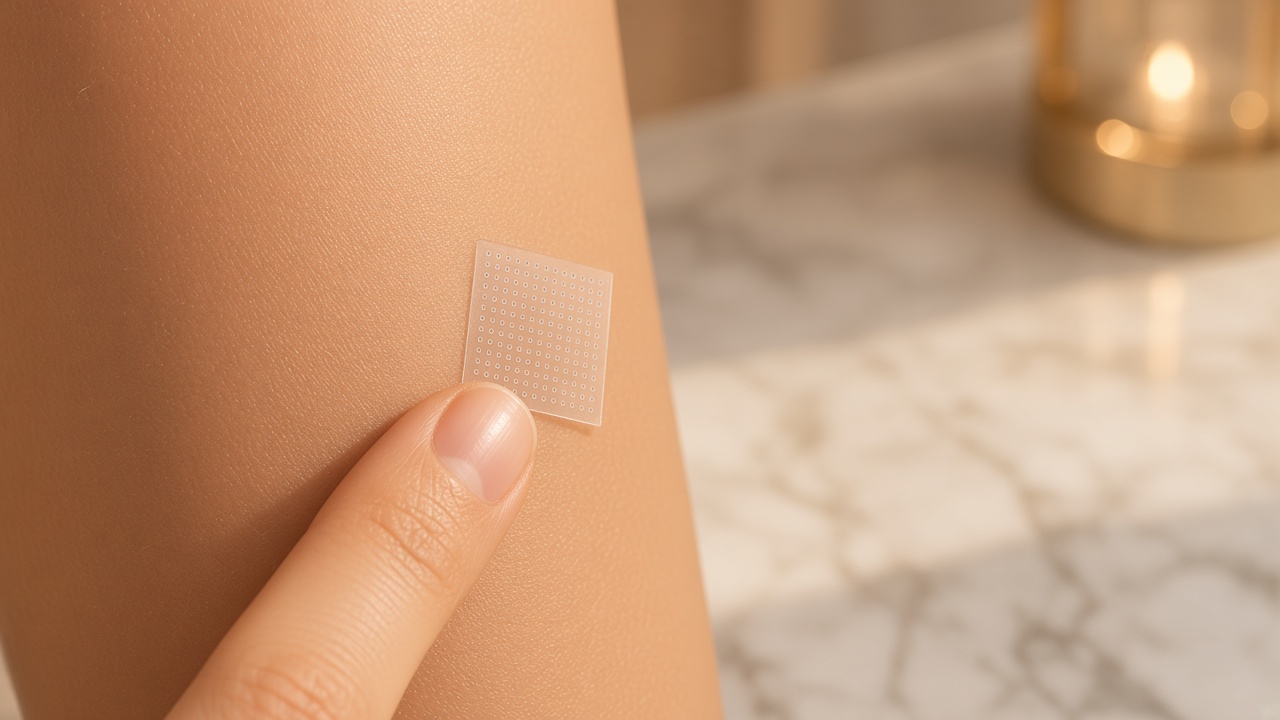
A microdart spot patch costs more than a normal hydrocolloid disc, so it is worth putting it on properly the first time.
A hydrocolloid patch is about 15–40p. A microdart patch is usually £0.60–£2.50 or more each. Check the shop, because the price changes. Neither patch is a cure. If a spot is deep, painful, cystic, or it keeps coming back, see a GP.
Use hydrocolloid when a spot is open or weeping. Use microdart when the bump is still closed. If you are not sure, read hydrocolloid vs microdart.
Check the spot before you open the pack
Look at the spot before you peel the backing.
A whitehead, broken skin, or any fluid means you want a hydrocolloid patch. That is the thin round patch that collects fluid. The overnight hydrocolloid guide shows how to put one on so it stays.
A microdart patch is for a closed bump. There is no white head, and nothing is leaking. It is usually a small square with tiny dissolving cones. Put the square on that one bump.
If a hydrocolloid patch stayed clear overnight, the bump was probably still closed. Buying a thicker disc will not change that. The unchanged-bump guide explains this.
Do not pick the spot first. If it is deep, very sore, spreading, or it returns in the same place, skip the patch and see a GP.
An under-eye oval or a forehead crescent is not a spot patch for your chin. See the dissolving patch guide if that is the box you opened.
Wash the skin and let it dry
Wash the area with a plain cleanser, or with water. Wait until it feels dry to the touch.
Nearly dry after a hot shower is not dry enough. Bathroom steam can stop the patch from sticking. Give it a few minutes in a cooler room.
Do not put moisturiser, oil, serum, balm, or SPF on that exact bit of skin. You can still use them on the rest of your face. Cream under the patch is a common reason it lifts off.
Peel the backing off slowly
Hold the patch by the edge, or by the tab. Peel the backing off slowly.
Do not pinch the cone side. The tiny cones are the part you have paid for. If you squash them, the patch will not sit flat.
If the patch folds, the cones crush, or the sticky side sticks to itself, throw it away. Do not unpeel it and try again.
Revolution Super Dart has its cones on a small hydrocolloid dome. Skin Choice Classic Darts are a plain square. Be just as careful with both. Do not touch the cone side, and do not squash a Super Dart as if it were a cheap round disc.
The hydrocolloid layer on Super Dart can take a little fluid if the spot is slightly further along. It is still the wrong patch for a weeping whitehead.
Put the middle of the patch on the bump
Place the middle of the patch on the bump, not on the clear skin next to it.
A hydrocolloid disc can be a little larger than the spot and still work. A microdart patch needs the cones on the raised bit. A few millimetres to one side means you have covered the wrong skin.
Press the whole patch, not only the middle. Hold it for several seconds so the edge sticks.
Check the edge in the first few minutes. If a corner is loose, press it again on dry skin.
If it will not stick, throw it away. Do the same if you have peeled it off to start again. Do not leave it on the sink for later. A crushed patch, or one that has already been on your skin, will not stick properly.
Hair, a beard, your glasses, or the side of your jaw on the pillow can lift an edge. Tuck your hair away. Check the edge before you eat, talk for a while, or lie on that cheek.
Leave it on for the night
On this site, the usual time is six to eight hours, or overnight. If it feels comfortable, leave it on.
Do not peel it off after twenty minutes to check the bump. You will have used the patch without giving it time.
A microdart patch does not go white in the middle the way a hydrocolloid patch can. A clear patch in the morning is not the same sign. Read the white-centre guide for hydrocolloid colour, not for a microdart patch.
Take the patch off
Peel slowly from one edge, close to the skin. Do not pull it straight up. If it tugs, wet the edge, wait a few seconds, and peel again.
Throw it away. It is single-use. Do not put it back in the packet, and do not move it to another spot.
If the bump looks the same in the morning, wait before you use a second patch. Check that the first one stayed in the middle, that there was no cream underneath, and that the bump was closed.
If the skin is more painful, the area is spreading, or you feel unwell, stop and see a GP.
Where to buy in the UK
Two packs on this site cover this format.
Revolution Super Dart (Amazon UK) has cones on a hydrocolloid dome. It is often listed around £5.51–£9 for 9 patches. Skin Choice Classic Darts (Amazon UK) are a plain microdart patch, often listed around £10.99. Holland & Barrett stock Skin Choice as well.
Check the price on the day. Microdart patches here are usually about £0.60–£2.50 or more each. More shops are on where to buy microdart patches.
If the spot is open or weeping, do not buy either pack for it. Hydrocolloid shops are on where to buy hydrocolloid patches. More reading is in all guides. If you are still choosing, start with hydrocolloid vs microdart.